
Editorial illustration
✏️ From the Golden Age to the AI slop era

In 2009, as a senior in college and a “print journalism major,” I started an internship at The Atlantic here in D.C. This was firmly the era of Ta-Nehisi Coates’ and Andrew Sullivan’s blogs, and the offices were in the Watergate complex, with a view of the Kennedy Center.
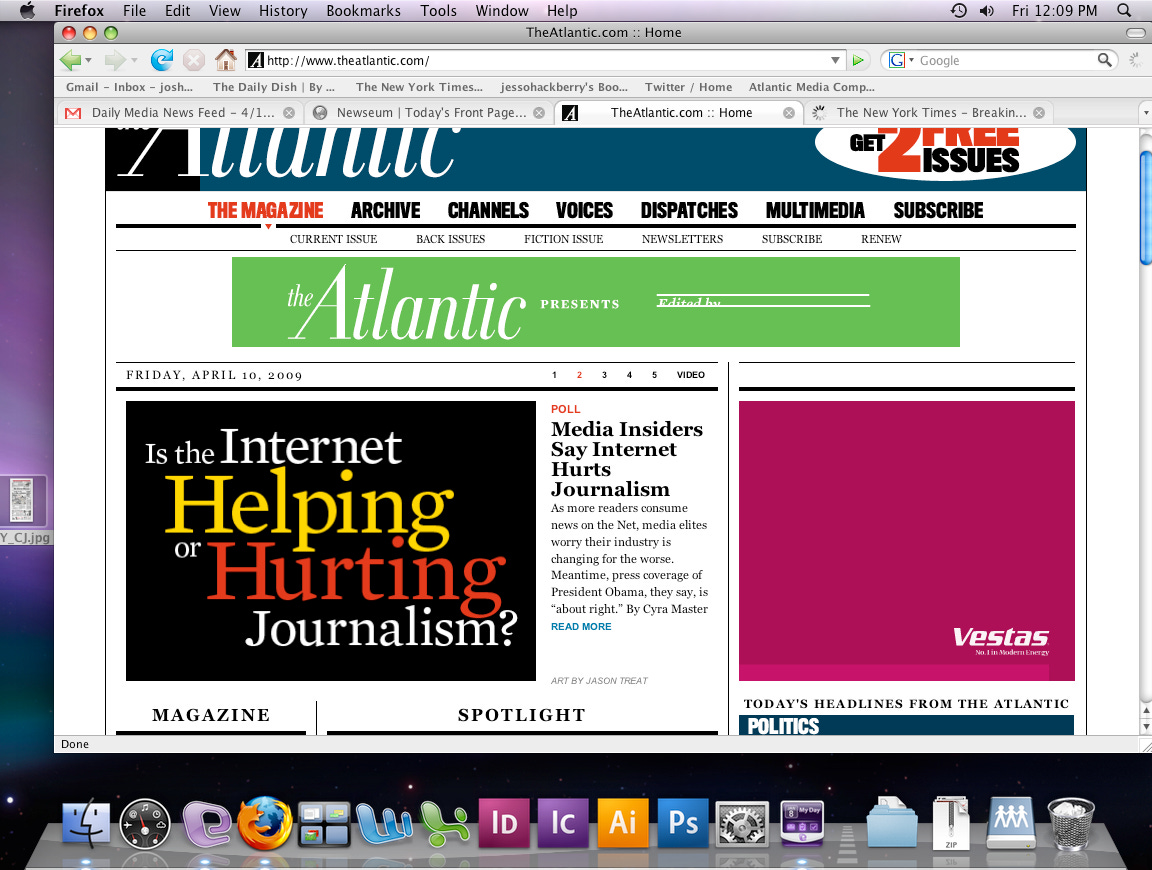
Each week I spent some time in the art department, mailing tear sheets and comp copies to the professional illustrators who had appeared in the magazine, like Istvan Banyai. This was an unusual peek behind the scenes at one of the very best remaining editorial illustration gigs anywhere.
The job of an illustrator for a news magazine, newspaper, or website is deceptively simple. The Art Director invites you to interpret an idea, with discrete specifications, ideally in the style they sought you out for. Your art will accompany an article, or maybe even grace the cover. It’s meant to entice the page-flipper, or the newsstand shopper, or the bored lunchbreak scroller. When everything is right, and the assignment is a perfect match for every bit of your skill and talent, there’s nothing better.
I should know. I freelanced as an illustrator, cartoonist, and writer for the better part of a decade (usually also waiting tables or slinging cheese) while my wife, Alli, held down a real adult D.C. job. As a nonfiction cartoonist, sometimes I was hired for situations where photography was impossible — housing court, clandestine crime, anti-terrorism cyber strike team.
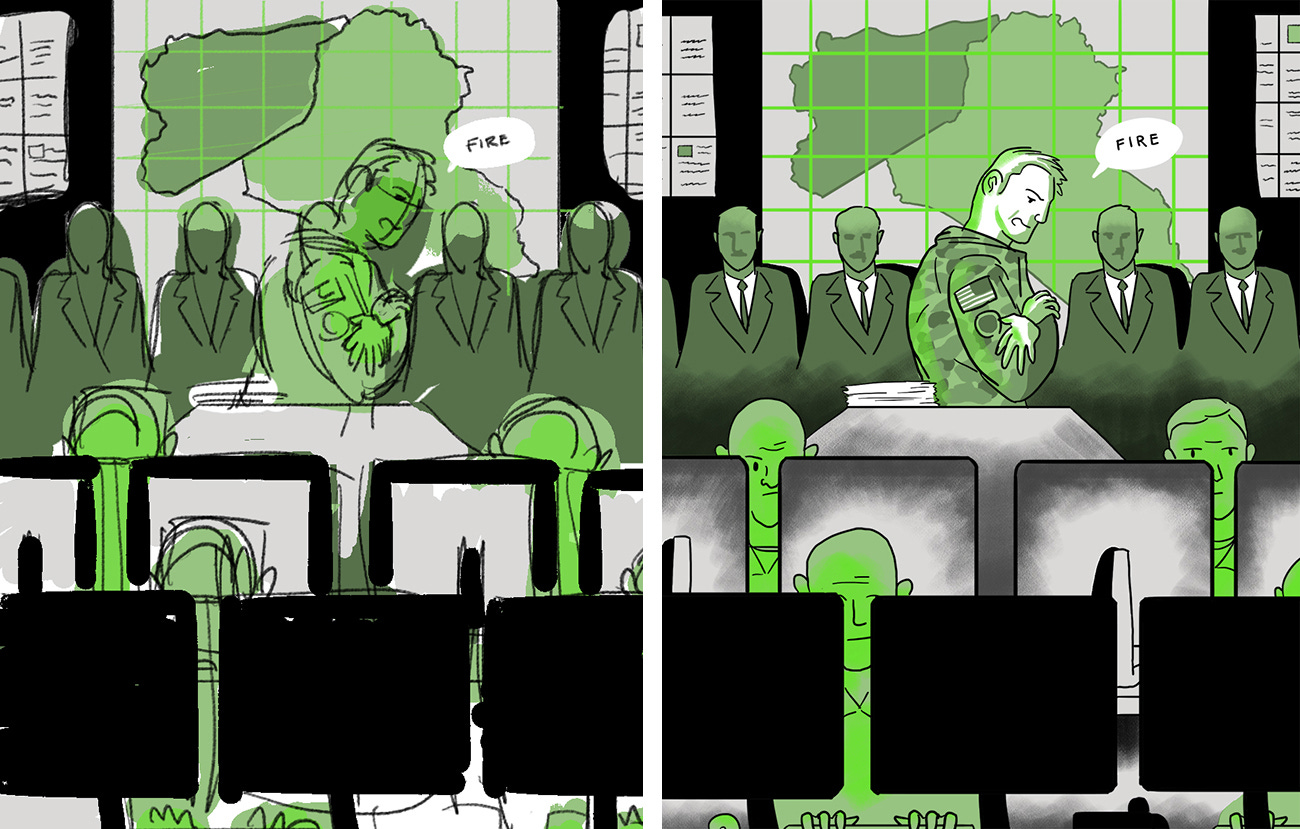
I’ve always thought of myself as a cartoonist first. There is a difference: illustration is like looking at the moon on one single night. Beautiful, but there’s no context for whether it’s waxing or waning. Comics is the whole lunar cycle.
Illustration can be its own special thing, with a unique role to play in journalism that was once highly valued. In the so-called Golden Age, from the ‘50s through the ‘70s, there were minor and major gods on illustration’s Mt. Olympus. Historian David Apatoff on the legendary Bernie Fuchs (links added by me):
There were many great illustrators who came and went during those years, but I think Fuchs was the last “rock star” illustrator of the Mad Men generation, when ultra-cool illustrators drove Porsches or Rolls Royces and shaped public taste using a mass media that was still relatively homogeneous. The Push Pin artists or Bob Peak were other examples of hugely influential illustrators in the ’60s. By the 1980s the media had fragmented and the role of illustration had diminished, making it more difficult for an illustrator to repeat Fuchs’ “height of popularity.”
From then on, pay for editorial illustration more or less stagnated, and a parade of competitors rolled in, including stock photography and illustration, public domain imagery, and yep, AI. Even two decades ago, it was extraordinarily tough to break in at one of the last few prestige publishers, including The Atlantic.
Yet truthfully, there’s still a lot of inspiring illustration being published today. There are amazing artists working now, like Christoph Niemann and Malika Favre. Many incredible cartoonists also work as illustrators, like Adrian Tomine and R. Kikuo Johnson.
Which is why it gives me no pleasure at all to bear witness to the devaluation of illustration through generative AI. It is demoralizing to watch as these companies — some of the same companies that benefitted from us marketing ourselves on their social media platforms — gobble up millions of hours worth of real artistic effort and offer up soulless, complex illustration for free.
A couple of caveats here. I am not as resolutely anti-AI as you might think, and actually find myself using it for a variety of things. But I think it’s vital to use these tools for a reason, and to find your own boundaries and limits. I’m actually really excited about tools like Adobe Illustrator’s turntable feature. This gels with the kind of “no such thing as cheating” cartooning I came up in: trace, copy, go nuts — just make it your own. But you’ll never see me passing off AI-generated writing or illustration as my own in this newsletter.
The status quo now seems to be unlabeled, seemingly handmade, uncanny rip-offs and incomprehensible faux art. This stuff is often so bad. Like, worse than you’d expect, given that most of these models, like Nano Banana — the state of the art as I write this — can give you nearly anything you want visually.
The reason so many of these images fail is that the real secret of editorial illustration is that it’s a partnership between art director and illustrator. Formulating an idea for a piece is also a skill, honed over time. Real ones know that New Yorker covers aren’t just good because they can get the best work, but also because Françoise Mouly has been holding it down as Art Editor since 1993.
Even with the AI of it all, I remain hopeful for this reason: illustration has always been in a crisis, and it has always survived. In my office I have multiple editions of the Graphic Artists Guild Handbook: Pricing & Ethical Guidelines. In 2003, Robert Kanes described in his Forward,
A perfect storm combining a poor overall economy, a battered tech sector, and the worst ad slump in 40 years. The result? As you’d guess, there is renewed pressure on freelancers to accept spec work, badly framed contracts, and lower fees.
Ten years later, the Handbook warned that, because all work is now delivered digitally, “Some unscrupulous art directors and editors have digitally altered the illustrator’s work without permission.” It never ends.
There will, I’m sure, continue to be publications that pay artists for illustration. Who knows, maybe it will become even more special. When no one needs to draw and anyone can prompt up an oil painting, the few who specialize in these skills may even become rock stars again.
I appreciate this as a comics creator and amateur topical illustrator. I recently moved to Procreate which no doubt, some artists wouldn’t ever touch. I think the thing I hate the most is every company trying to shove AI into everything,to supplant our abilities to do anything. It’s bad enough I farm out a reasonable portion of my attention to this stupid phone.
I love Procreate! I think it's a great app and the competition is really important for Adobe